about


the house : discover what's inside
the gardens : a verdant mini Eden
the views : spectacular 180° vistas

Gül Baba House, as the villa is affectionately known, is named after a 16th-century Ottoman Dervish who introduced the rose to Europe. There's a statue of him in Budapest, where he died in 1542 and where the owners once lived. His tomb is the only Muslim pilgrimage site in Europe.
The villa took three years to build, using local materials such as juniper and cedar wood, and was crafted by workers from the area. There are verandas and balconies on all of the villa's three floors, offering stunning views of the sea, hillsides and mountains. We're just on the edge of the growing village of Kalkan and are fortunate to be surrounded by olive groves and a more traditional way of life, one that is rapidly disappearing in other areas. In spring, you can still see young kids – the hairy ones with tails – gambolling as they're led down the goat path nearby.
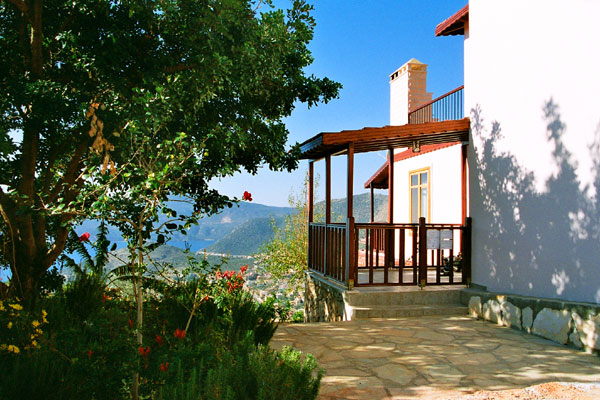
The house is perfect in any season: in winter you can build a roaring fire (it gets pretty chilly at night!) while in summer bedrooms are air-conditioned - though because of special insulation and our position on a hill, natural breezes are cool enough for most people except on the hottest days. The garden is beautiful throughout the year, with an abundance of flowers and fruit in every season.
The house is fitted with modern appliances and furnishings including wireless internet access. Antiques and objects from our travels around the world are in all rooms.
Please note that there is no pool, as we feel it is more important to be surrounded by fruit trees and scented flowers. The sea is a five-minute drive away.
the owners
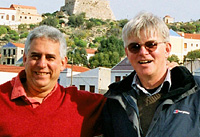
Steve Fallon and Mike Rothschild, now committed Londoners having lived in the US, Hong Kong, Budapest and Tuscany, spent three years building Gül Baba House after falling in love with the Lycian region. Steve is a language buff and travel writer whose articles have appeared in newspapers and magazines around the world including the New York Times and Financial Times. Most of Steve's time is devoted to writing guidebooks for Lonely Planet, covering countries and cities as diverse as Hong Kong, Paris, Slovenia and now Turkey too. Mike was a financial journalist for 25 years before jumping to the other side and working as a researcher for a hedge fund. His love of cooking has made him a favourite among stall-owners in the region's markets, where he has sniffed out seasonal delicacies including morels, samphire and lamb's neck.
the house
Constructed over three floors, Gül Baba House contains a total of four bedrooms and three bathrooms. The top floor has independent access.
main (middle) floor
The main floor has two bedrooms, one bathroom, kitchen, sitting room and dining area. It gives out onto a veranda with wonderful southwest-facing views of the Mediterranean.
- master bedroom – One queen-size bed. The room is fitted with an attractive modern black and white suite built by young designers in Ankara and includes a double wardrobe and cupboard, a tall chest of drawers and bedside tables. Air-conditioner.
- back terrace bedroom – Two single beds, traditional pine flooring and wardrobe, two bedside tables. This room has its own terrace and entrance. Air-conditioner.
These two bedrooms share an extra large bathroom equipped with a walk-in glass-brick shower and Ottoman-inspired sink unit.
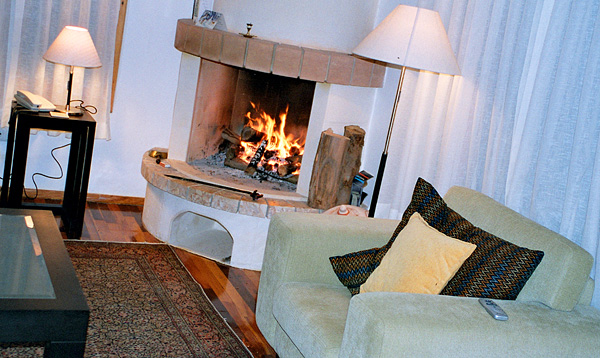
- living room – The living room contains a very large and comfortable sofa and two big armchairs facing a hand-crafted fireplace. There is artwork and antique furniture throughout. The room includes a Bose CD player.
- dining area – The main floor includes a dining area with a table large enough for four people. The dining area gives off to the large veranda, a perfect place to sit and watch sunsets, where you'll find several folding chairs, a rocking chair and another table that can seat four people.
- kitchen – The large kitchen has hand-made cabinets and ample workspace. There's a four-ring gas stove with electric oven/grill. Dishwasher, microwave, toaster and ample pots and pans, utensils, cutlery, crockery and gadgets.
lower floor
The lower floor is reached either by an internal staircase or via the garden. It has a bedroom with en suite bathroom, sitting/dining area, washing machine and kitchenette.
- garden bedroom – One double bed with en suite bathroom. Wardrobe and two bedside tables. The bedroom looks onto the garden and is quite serene. Air-conditioner.
- sitting room – Double pullout sofa bed, table and chairs. This room can be reached either by an internal staircase from the main floor or independently from the garden.
- kitchenette/laundry area – This area has sink, fridge and two-burner hob as well as a washing machine, iron and ironing board.
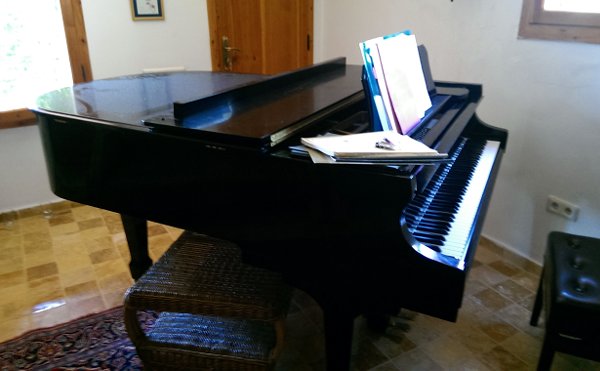
- grand piano – Gül Baba House is extra special in another way: we have a grand piano. Guests are welcome to make their own music for a really memorable holiday.
top floor
The top floor apartment has independent access and is quite large with a wooden floor and ceiling. It includes a bedroom with en suite bathroom, large sitting and dining room with kitchen. The sitting room gives out to the roof terrace with stunning views of the sea and mountains.
- panorama bedroom – One king-sized bed in a room filled with rustic Turkish furnishings and offering spectacular views. En suite bathroom. Large wardrobe, chest of drawers and bedside cabinets. Air-conditioner.
- sitting room & kitchen – Large open-plan room with kitchenette, table for six, sofa and chairs. Satellite TV and DVD player.
- roof terrace – Reached through sliding doors from sitting room. Spectacular views of the sea and mountains. Four lounge chairs and side tables, large sun umbrella and built-in barbecue.
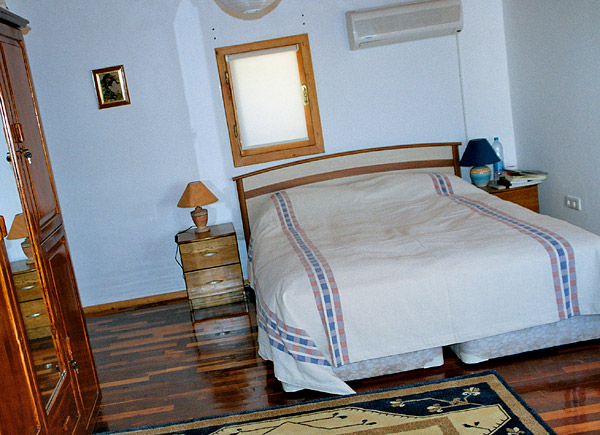
The top floor bedroom.
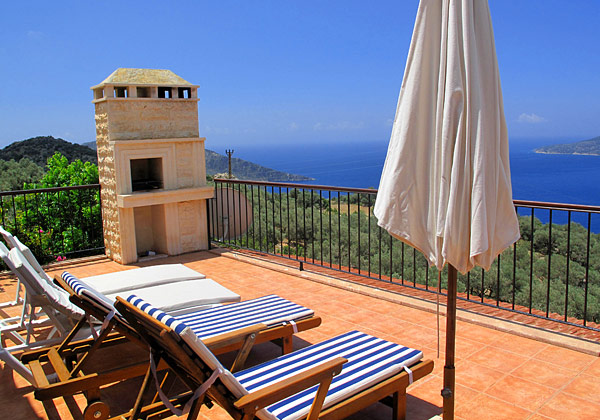
The roof terrace.
the gardens
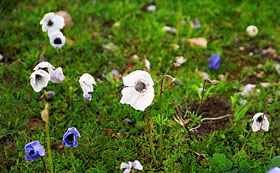
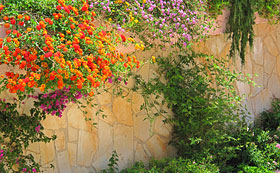
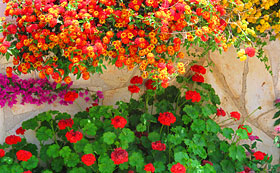
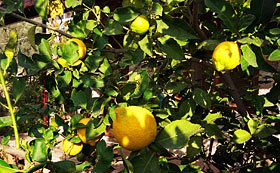
The gardens are a-bloom with flowers and fruit throughout the year. In winter there are lemons, oranges, kumquats, kaffir (or Thai leprous) lime. Spring offers wisteria, bougainvillea, various types of jasmine, and the flowering fruit trees, including apricot, loquat, peach and banana. The scent from the fragrant plants can be quite strong. In summer, a back wall of hanging plants is a spectacular riot of colour. In autumn, our pomegranate tree produces abundant fruit.
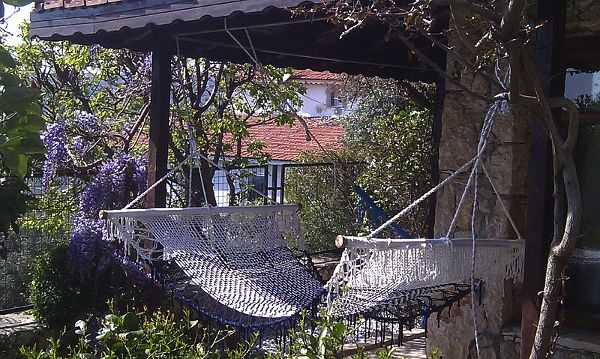
There is a Mexican-style hammock on the lower veranda by the garden.
the views

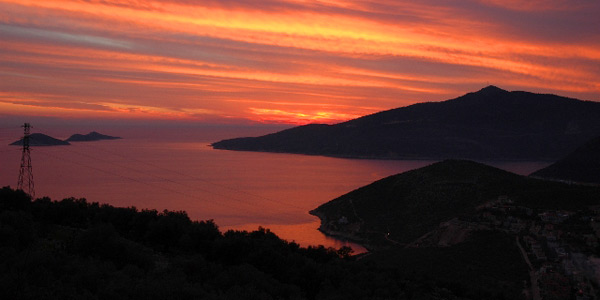
The view from Gül Baba House at sunset.
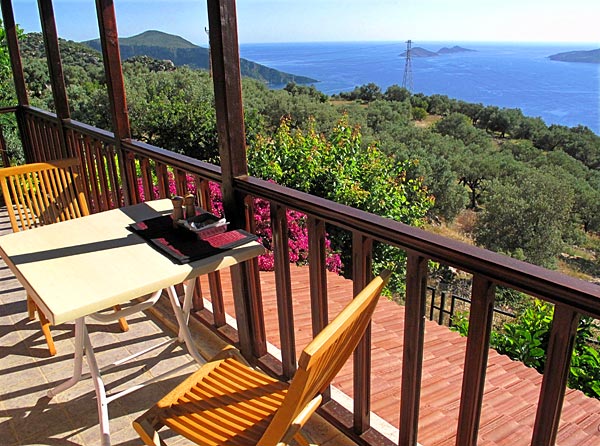
The view from the main floor terrace at Gül Baba House.
top |